
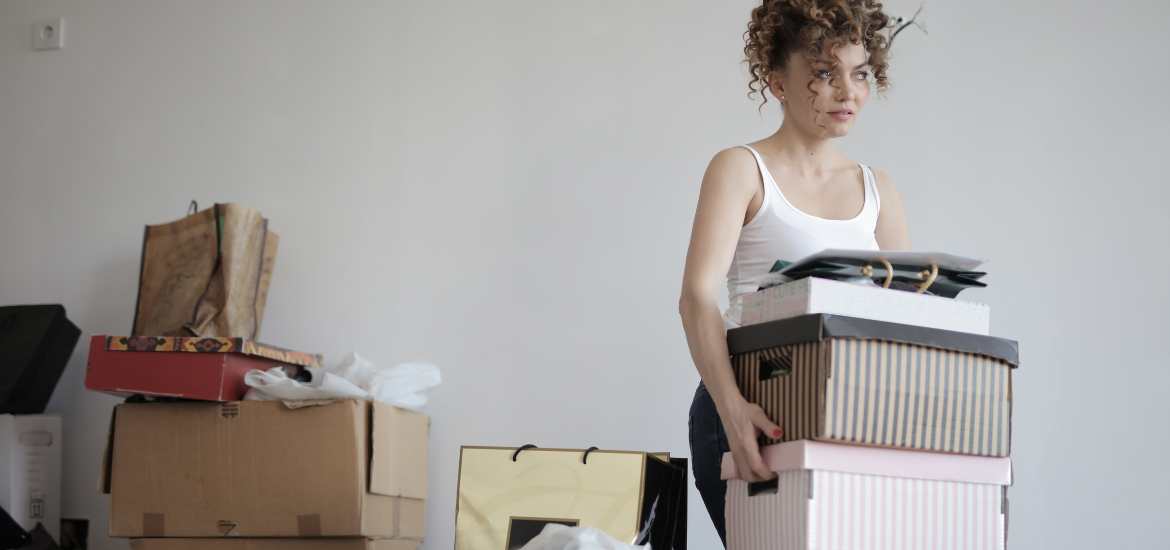
Ever opened a cupboard and wondered how on earth you managed to accumulate so much stuff? Or looked around your spare bedroom and realised it hasn’t actually been a bedroom for several years?
You’re certainly not alone. From overflowing wardrobes and kitchen cupboards to garages that haven’t seen a car in a decade, clutter has a habit of creeping into our homes without us noticing.
The problem is that decluttering often feels like an enormous job. Where do you start? What should you keep? And what happens to the things you genuinely need but simply don’t have room for?
The good news is that getting organised doesn’t have to involve a weekend of chaos, arguments over sentimental possessions or a dozen trips to the tip.
With a sensible room-by-room approach, a little planning and the option of personal storage in Chesterfield, you can reclaim your living space without having to part with everything you own.
Here’s how to tackle it.
First Things First: Decluttering Doesn’t Mean Throwing Everything Away
There’s a common misconception that decluttering means becoming a minimalist, owning three plates and giving away anything that doesn’t spark joy.
In reality, it’s about making your home work better for you.
Some belongings are used every day. Others come out occasionally, perhaps at Christmas, during the summer holidays or when family members visit. And then there are the things you want to keep for sentimental reasons, even if you don’t particularly want to look at them every morning.
The trick is knowing the difference.
Before tackling individual rooms, divide your belongings into four categories:
- Keep: Things you regularly use, need or genuinely enjoy having around.
- Donate or sell: Items in good condition that someone else could make better use of.
- Recycle or dispose of: Broken, damaged or unwanted belongings that have reached the end of their useful life.
- Store: Items worth keeping but which don’t need to take up valuable space in your home.
That final category is where a secure storage facility in Chesterfield can be particularly useful, giving you somewhere to keep belongings without allowing them to dominate your everyday living space.
1. The Living Room: Reclaim Your Space for Living
Your living room should be somewhere to relax, entertain friends or put your feet up after a long day. Unfortunately, it can easily become a dumping ground for everything that doesn’t have a proper home.
Books, magazines, toys, spare cushions, old DVDs, electronics and furniture all compete for space.
Start with the obvious clutter.
Clear coffee tables, shelves and sideboards, then work through cupboards and storage units. Be realistic about what you actually use.
Ask yourself:
- Have I read this book, and am I likely to read it again?
- Does this piece of furniture serve a purpose?
- Do I really need seventeen decorative cushions?
- Am I keeping this because I love it or simply because I’ve always had it?
What could go into storage?
Occasional furniture, collections of books, seasonal decorations, spare lamps and inherited furniture that you want to keep for a future home.
If you’ve inherited a beautiful sideboard from a relative but don’t have anywhere suitable for it, there’s no reason it needs to spend the next five years blocking your hallway.
Quick win: Remove five things that don’t belong in the living room. It’s a small change, but you’ll notice the difference immediately.
2. The Kitchen: Where Mystery Gadgets Go to Retire
Kitchens are particularly good at collecting things we convince ourselves we’ll use.
Bread makers, ice cream machines, novelty mugs, duplicate utensils and that complicated gadget bought during a brief enthusiasm for healthy eating.
And that’s before you investigate the cupboard containing thirty-seven mismatched plastic containers.
Start by emptying one cupboard at a time. Check food dates, match containers with lids and identify equipment you haven’t used for years.
Be particularly ruthless with duplicates. Unless you’re regularly catering for large groups, you probably don’t need four tin openers.
What could go into storage?
Special-occasion crockery, large serving dishes, additional dining chairs and kitchen equipment used only for occasional events.
However, anything being stored should be thoroughly cleaned and completely dry before packing. Food, perishable items and anything likely to attract pests should never go into a storage unit.
Quick win: Tackle the dreaded plastic container cupboard. Ten minutes could transform your kitchen storage.
3. The Bedroom: Make Room for a Better Night’s Sleep
Bedrooms often become home to overflowing wardrobes, piles of clothes and belongings that don’t fit anywhere else.
But your bedroom should be a place to rest, not a permanent reminder of your unfinished to-do list.
Interestingly, research has suggested a connection between cluttered living environments and stress.
A study published in Personality and Social Psychology Bulletin examined how people described their homes and found associations between stressful home descriptions and patterns of cortisol, a hormone associated with stress. Although the research doesn’t prove that decluttering directly improves sleep or wellbeing, it does suggest that our surroundings can be connected to how we feel: https://doi.org/10.1177/0146167209352864
Start with your wardrobe.
Take everything out, sort it into categories and consider whether each item still fits, suits your lifestyle or gets worn.
Then move on to bedside tables, drawers and the mysterious collection of belongings under the bed.
What could go into storage?
Seasonal clothing, spare bedding, occasional-use suitcases, keepsake boxes and furniture you’re saving for another room or property.
Vacuum storage bags can help reduce the space taken up by certain textiles, although delicate fabrics and items requiring airflow may be better stored in breathable containers.
Quick win: Clear your bedside table completely, then put back only the things you genuinely need.
4. The Children’s Bedrooms: Tackle the Toy Avalanche
If you’ve got children, you’ll know that toys seem to multiply overnight.
One minute there’s a neat basket of building blocks. The next, you’re navigating an obstacle course of plastic dinosaurs, dolls, puzzles and tiny pieces that are particularly painful to stand on.
Children’s rooms benefit enormously from regular decluttering, especially as their interests change.
Rather than trying to remove everything at once, work through toys, books, clothes and furniture separately.
For older children, involve them in deciding what to keep. Younger children may find it easier to choose a few favourites from a small selection rather than face an entire room’s worth of decisions.
What could go into storage?
Outgrown baby equipment, children’s furniture, toys being kept for younger siblings, memory boxes and clothing that may be passed down.
Before storing baby equipment, check that it remains safe, complete and suitable for future use. Safety standards and product guidance can change, particularly for items such as car seats and cots.
Quick win: Introduce a toy rotation system. Keep some toys accessible and store others safely, swapping them periodically to reduce the amount on display.
5. The Spare Bedroom: Give Your Guests Somewhere to Sleep
Ah, the spare bedroom.
That wonderful room that was originally intended for guests but has gradually become a combination of storage cupboard, laundry room, home office and general dumping ground.
If you’re currently moving boxes off the bed whenever someone comes to stay, it might be time for a rethink.
Begin by deciding what you actually want the room to do.
Is it primarily a guest bedroom? A home office? A hobby room? Or perhaps a combination of two uses?
Once you’ve established its purpose, removing unnecessary belongings becomes much easier.
What could go into storage?
Unused desks, extra chairs, dismantled furniture, old office equipment, archived paperwork and belongings being kept for children who have moved away.
For paperwork, remember that confidential documents need appropriate protection, and important records should be kept somewhere suitable for their sensitivity and accessibility requirements.
Quick win: Clear the bed and floor first. You’ll immediately see how much usable space the room actually has.
6. The Garage, Loft and Shed: Face the Final Frontier
If the spare bedroom is where clutter goes to hide, the garage is where it goes to retire permanently.
Old bicycles, camping equipment, Christmas decorations, garden furniture, DIY materials and mysterious boxes labelled ‘miscellaneous’ can accumulate for years.
These spaces often contain perfectly useful belongings, but they’re also prime locations for things that should have been disposed of long ago.
Start by separating everything into categories. Group gardening equipment together, sort through tools and identify seasonal belongings.
Be careful when moving heavy or awkward items. The Health and Safety Executive recommends planning lifts, keeping loads close to your body and avoiding twisting while carrying them: https://www.hse.gov.uk/msd/manual-handling/good-handling-technique.htm
What could go into storage?
Camping equipment, sports gear, bicycles, seasonal garden furniture, Christmas decorations and other possessions that are only needed occasionally.
Before moving anything into storage, check whether the facility accepts it. Fuels, gas cylinders, hazardous chemicals and other dangerous materials are generally prohibited.
Quick win: Empty one shelf or clear one square metre of floor space. You don’t need to conquer the entire garage in one afternoon.
7. The Hallway and Landing: Stop the Obstacle Course
Hallways and landings are easily overlooked when decluttering, but they’re often the first places visitors see.
Shoes, coats, parcels, sports bags and items waiting to be taken upstairs can quickly turn a hallway into an obstacle course.
Start by removing anything that doesn’t belong there. Then consider whether you have enough practical storage for everyday essentials.
What could go into storage?
Out-of-season coats, spare shoe racks, unused furniture and seasonal sporting equipment.
Remember that hallways and stairs are also important escape routes, so keeping them clear is about safety as well as appearance.
Quick win: Put away every pair of shoes that isn’t being worn regularly.
How to Declutter Without Getting Overwhelmed
One of the biggest mistakes people make is trying to tackle the entire house in a single weekend.
By Sunday evening, every room is covered in piles of belongings, nobody can find the kettle and the whole family is questioning whose idea this was.
Instead, try a manageable seven-day plan.
| Day | Your task | Suggested time |
| Monday | Living room shelves and cupboards | 30 minutes |
| Tuesday | Kitchen cupboards and drawers | 30 minutes |
| Wednesday | Bedroom wardrobes and drawers | 45 minutes |
| Thursday | Children’s bedrooms or hobby areas | 30 minutes |
| Friday | Spare bedroom | 45 minutes |
| Saturday | Garage, loft or shed | 60 minutes |
| Sunday | Hallway, final sorting and packing | 30 minutes |
You can spread the plan over several weeks if that suits you better. The important thing is to finish each small area before moving on to the next.
And if you’re getting rid of unwanted belongings, don’t automatically send everything to landfill.
WRAP’s Recycle Now service provides a useful Recycling Locator to help households find appropriate recycling options for different materials: https://www.wrap.ngo/take-action/recycle-now/recycling-locator-tool
When Personal Storage Makes Sense
Sometimes, no amount of organising will solve the problem because you simply have more belongings than your home can comfortably accommodate.
And that doesn’t necessarily mean you own too much.
You might be:
- Downsizing but not ready to part with furniture.
- Making room for a new baby or family member.
- Turning a spare bedroom into a home office.
- Keeping furniture for children moving into their first homes.
- Storing seasonal equipment that only gets used a few times a year.
- Holding on to inherited possessions with sentimental value.
- Renovating your property and needing temporary space.
In these situations, personal storage in Chesterfield can offer a practical alternative to squeezing everything into cupboards, garages and spare rooms.
It allows you to keep belongings you genuinely value while creating more usable space at home.
Of course, the aim isn’t to transfer years of unwanted clutter into a storage unit and forget about it. Be selective about what you keep and consider whether the cost of storing something makes sense compared with its value or the cost of replacing it.
Packing for Storage: A Little Organisation Goes a Long Way
If you’ve decided to use a storage facility in Chesterfield, spending a little extra time packing properly will make life considerably easier when you need something back.
Here are a few simple tips.
Use sturdy, appropriately sized boxes. Smaller boxes are better for heavy items such as books, while larger boxes work well for lightweight belongings.
Label everything clearly. ‘Kitchen – Christmas Dinnerware’ is much more helpful than ‘Stuff’.
Create a basic inventory. A list on your phone or spreadsheet can save hours of searching later.
Protect fragile items. Wrap glassware, ornaments and delicate possessions individually and use appropriate protective packing materials.
Keep frequently needed items accessible. If you’re likely to retrieve your camping equipment before summer, don’t bury it behind twelve boxes of books.
Make sure everything is clean and dry. Moisture and dirt can damage stored belongings over time.
Check your insurance. Don’t assume your household policy automatically covers items kept away from home. Confirm what protection applies and whether additional cover is required.
It’s also worth choosing a storage unit that’s appropriate for the volume and type of belongings you’re keeping. Too small and you’ll struggle to access anything; unnecessarily large and you could be paying for space you don’t need.
Your Home, Just With a Little More Breathing Room
Decluttering isn’t about creating a show home where nobody is allowed to touch anything.
It’s about being able to open a cupboard without an avalanche, invite guests to stay without relocating twenty boxes and find the Christmas decorations without dismantling the garage.
More importantly, it’s about making your home comfortable and practical for the way you actually live.
Start with one drawer, one cupboard or one room. Make sensible decisions about what stays, what goes and what could be stored elsewhere.
You might be surprised by how much space you can reclaim.
Need More Space? Go Store Chesterfield Can Help
At Go Store, we understand that sometimes you need more room without having to say goodbye to belongings that matter.
Whether you’re clearing out a spare bedroom, making space for a growing family, downsizing or simply trying to get your home organised, our storage solutions can help you take back control of your space.
If you’re looking for personal storage in Chesterfield, take a look at the options available at Go Store and find a storage solution that suits your needs.
Because sometimes, the easiest way to make more room in your home is to give some of your belongings a home of their own.