
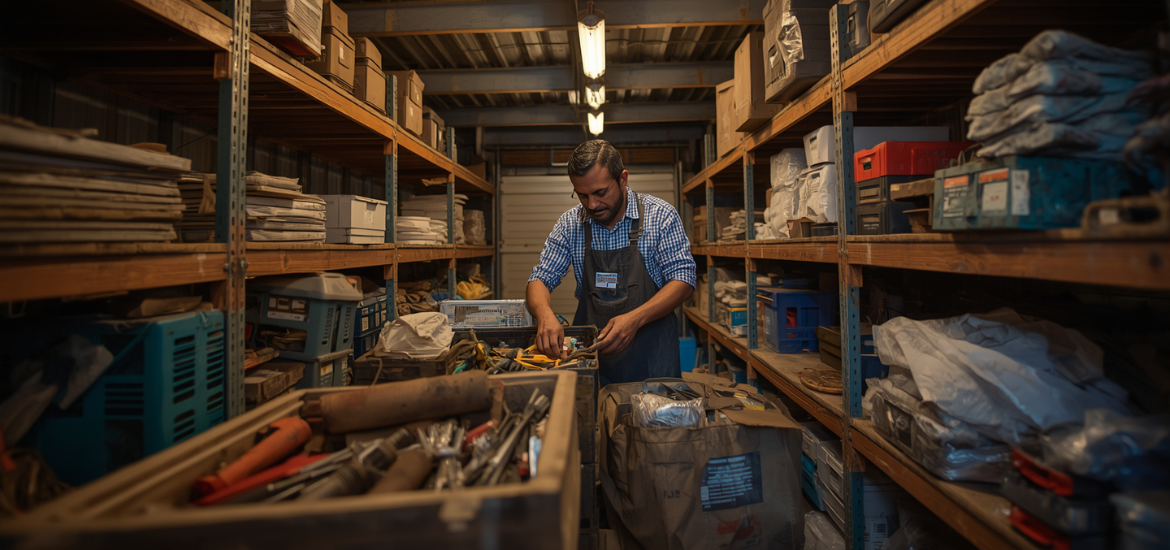
For a tradesperson, tools are more than a collection of expensive gadgets rattling around in the back of a van. They are your livelihood.
Without the right drill, saw, tester, ladder or specialist equipment, a straightforward day’s work can quickly become a series of apologetic phone calls, rearranged appointments and lost income. Add boxes of fittings, spare parts, protective equipment and leftover materials, and it is easy for a van, garage or spare room to become an unofficial, and increasingly chaotic, warehouse.
That is where storage units in Chesterfield can make a genuine difference. A secure, well-organised unit gives tradespeople a practical base for protecting valuable equipment, managing stock and keeping work separate from home.
Tool theft costs more than the replacement bill
Tool theft continues to be a serious problem for UK tradespeople. Direct Line Group reported that 25,525 tool thefts were recorded during 2024, with stolen tools valued at approximately £40 million. That works out at one reported incident roughly every 21 minutes: https://www.directlinegroup.co.uk/en/news/brand-news/2025/19052025.html
The cost is rarely limited to buying another drill or replacing a set of power tools. A theft can also mean:
- Cancelling work while replacement equipment is sourced
- Losing income from delayed projects
- Paying an insurance excess
- Spending time completing police and insurance reports
- Damaging customer relationships
- Replacing specialist equipment that is difficult to obtain quickly
In a 2025 parliamentary debate on the theft of tools of trade, MPs highlighted industry estimates suggesting that one in ten tradespeople could experience tool theft during the year. The debate also recognised the wider impact on families, apprentices, customers and small businesses: https://hansard.parliament.uk/commons/2025-06-11/debates/B06C2CBF-6C3D-47D3-8BDB-1400E7AA7109/TheftOfToolsOfTrade
A replacement tool might have a price tag. The lost working days attached to it are often harder to calculate.
The van is convenient, but it should not be your permanent tool cupboard
Leaving everything in the van may seem efficient. You finish work, park up and everything is ready for the next morning.
Unfortunately, vans are regularly targeted precisely because thieves know they may contain valuable, portable equipment. Even when a van has upgraded locks and an alarm, storing thousands of pounds’ worth of tools inside it overnight can create an unnecessary risk.
Police advice consistently recommends removing tools from vans overnight wherever possible. Avon and Somerset Police also advises tradespeople to use secure tool safes or van vaults when equipment cannot be removed, as well as marking tools and recording serial numbers: https://www.avonandsomerset.police.uk/crime-prevention-advice/keep-your-vehicles-safe/delivery-vehicle-or-van/
Using secure self storage in Chesterfield does not mean emptying and repacking every screw, cable tie and tube of sealant at the end of every working day. It means deciding which items genuinely need to travel with you and which are safer at a secure base.
Your everyday hand tools may stay in the van during a busy working week. More expensive specialist equipment, spare machinery and excess stock can be returned to your storage unit until they are required.
What can a tradesperson keep in a storage unit?
The exact contents will depend on your trade, but a business storage unit can be useful for far more than a few dusty boxes.
Power tools and specialist equipment
Items used only for certain projects do not need to take up permanent space in the van. This could include breakers, tile cutters, generators, pressure-testing equipment, larger saws, inspection equipment or seasonal landscaping machinery.
Keeping less equipment in the vehicle can also make it easier to find what you need. There are few things more frustrating than knowing you own the correct attachment but being unable to locate it beneath three toolboxes and a roll of insulation.
Materials and spare parts
Plumbers, electricians, joiners, decorators and builders often accumulate usable materials from completed jobs. One unopened fitting or leftover board may not seem significant, but over time those leftovers can become valuable working stock.
A storage unit can provide space for items such as:
- Pipes and plumbing fittings
- Electrical components and cable
- Timber and sheet materials
- Tiles and flooring
- Paint, subject to storage restrictions
- Fixings, adhesives and sealants
- Protective sheets and dust-control equipment
- Workwear and personal protective equipment
- Packaging and customer delivery materials
Always check the storage provider’s rules before storing liquids, chemicals, fuels, gas cylinders, batteries or other potentially hazardous goods. The Health and Safety Executive provides specific guidance on the safe storage of flammable liquids and packaged dangerous substances: https://www.hse.gov.uk/pubns/books/hsg51.htm, https://www.hse.gov.uk/pubns/books/hsg71.htm
Seasonal equipment
Not every tool earns its keep throughout the year. Landscapers may need different equipment in winter and summer, while heating engineers, roofing contractors and property maintenance companies may experience strong seasonal changes in demand.
Rotating equipment between your van, workshop and storage unit prevents rarely used items from getting in the way of the tools needed today.
Documents and business supplies
A storage unit may also be useful for archived paperwork, job files, brochures, uniforms, promotional displays and other business materials.
Confidential customer information should be stored securely and in line with applicable data-protection requirements. Use lockable filing cabinets or sealed archive boxes rather than leaving paperwork loose on open shelving.
Storage can make stock control easier
A good storage system does not simply hide clutter behind a locked door. It should help you know exactly what you have.
Without an organised system, tradespeople can easily buy items they already own because the originals are buried in the garage, workshop or van. This ties up money in duplicate stock and creates more clutter.
Try dividing your unit into clear zones:
Fast-moving stock: Frequently used fittings, fixings and consumables should be near the entrance.
Specialist tools: Group equipment by task or type, rather than placing tools wherever there happens to be a gap.
Project materials: Keep materials allocated to a particular customer or job together and label them clearly.
Seasonal equipment: Store infrequently used machinery towards the back, provided it remains safely accessible.
Returns and repairs: Create a separate area for faulty equipment, unused customer returns or items awaiting a decision. Otherwise, they have an unfortunate habit of rejoining the usable stock.
Clear plastic boxes, heavy-duty shelving and large labels can turn a basic unit into a simple stockroom. Keep heavier items on lower shelves and avoid unstable stacks. The Health and Safety Executive’s warehousing guidance covers safe storage, manual handling, working at height and the prevention of avoidable accident: https://www.hse.gov.uk/pubns/books/hsg76.htm
Create an inventory before you need one
An inventory can save time, reduce unnecessary purchases and make an insurance claim easier if something goes wrong.
Record:
- The tool or item description
- Make and model
- Serial number
- Purchase date
- Approximate replacement value
- Storage location
- A photograph of the item
- A copy of the receipt, where available
The police recommend photographing valuable property, keeping receipts and recording serial numbers for tools and electrical equipment. Items can also be registered free of charge with Immobilise, the UK National Property Register:
https://www.police.uk/cp/crime-prevention/protect-home-crime/mark-your-property/, https://www.immobilise.com/
Marking tools with a business name, postcode, asset number or forensic marking product can make them harder to sell and easier to identify if recovered.
A simple spreadsheet is enough for many small businesses. Larger teams may benefit from an asset-management app that records which employee has taken each item.
Keep the unit tidy enough to work for you
There is a danger that a storage unit becomes a larger version of the cupboard you were trying to escape: open door, throw item inside, close door quickly before anything falls out.
A few simple habits will keep it useful:
- Leave a clear walkway through the unit.
- Label boxes on more than one side.
- Use shelving rather than building unstable towers.
- Keep an inventory near the entrance and save a digital copy.
- Return tools to their assigned places.
- Review unused stock every few months.
- Avoid storing damp equipment or wet textiles.
- Check manufacturer guidance before storing battery-powered tools for long periods.
Work equipment should also be inspected and maintained regularly. The HSE states that maintenance helps prevent problems, correct faults and keep equipment working effectively: https://www.hse.gov.uk/work-equipment-machinery/maintenance.htm
That old cement mixer may not improve simply because it has spent six months thinking about its behaviour in storage.
Check your insurance before moving equipment
Hiring a unit does not automatically mean every tool, piece of stock or item of equipment is insured against every possible event.
Before placing business assets into storage, speak to your insurer and check:
- Whether your existing policy covers goods away from your main premises
- Whether stored tools and stock need to be declared
- Whether there is a maximum value per item
- Whether overnight storage conditions affect cover
- Whether theft cover requires particular locks or security measures
- Whether batteries, chemicals or specialist equipment are excluded
- What evidence would be required when making a claim
Keep the value of stored equipment under review. A unit that initially contains £2,000 of tools can gradually become a £15,000 stockroom without anyone formally noticing.
Could self storage replace a workshop or warehouse?
A storage unit is not suitable for carrying out noisy manufacturing, repairs or trade work unless the provider specifically permits it. However, it can provide some of the practical benefits of business premises without the commitment of leasing a warehouse.
For sole traders and growing businesses, self storage units in Chesterfield can provide:
- Additional stock capacity
- A secure place for valuable equipment
- Flexible space during busy periods
- Separation between home and work
- Easier organisation of tools and materials
- Room to buy commonly used products in sensible quantities
- A central collection point for teams working across different sites
This can be particularly helpful for a business that is too large for the garage but not yet ready to take on a commercial lease, business rates and long-term premises costs.
Choosing the right storage facility in Chesterfield
Not all storage arrangements offer the same level of convenience or protection. Before booking, consider the following questions.
Is the site monitored?
Look for CCTV, alarm systems, secure perimeter controls and measures that restrict entry to authorised customers.
Is the unit indoors and dry?
Moisture can damage electrical equipment, metal tools, paperwork, packaging and stock. Ask whether the unit is suitable for the particular goods you plan to store.
Can you load and unload easily?
Ground-floor access can be particularly useful when moving heavy tools, machinery or boxes of materials. Long corridors, stairs and awkward loading areas become much less charming when you are carrying a tile cutter.
Are different unit sizes available?
Your requirements may change as the business grows or contracts. A provider offering a wide range of sizes can help you avoid paying for unused space or trying to squeeze stock into a unit that is too small.
Are the agreements flexible?
Trades can be unpredictable. A large contract may create a temporary need for more stock, while a quieter period may mean reducing the amount of space required.
Business storage at Go Store Chesterfield
Go Store provides business storage units in Chesterfield for tools, equipment, stock, documents and other commercial items.
Its business storage facilities include indoor units, 24-hour CCTV, a security alarm system, controlled entry for authorised people and a secure gated complex. Units are available in a range of sizes, from 15 sq ft to 1,500 sq ft, and are positioned on the ground floor for easier loading and unloading.
Go Store has two Chesterfield locations:
Queen’s Park
Baden Powell Road
Chesterfield
S40 2RL
Grassmoor
115 North Wingfield Road
Grassmoor
Chesterfield
S42 5EB
Whether you are a plumber with boxes of fittings, an electrician protecting expensive testing equipment, a joiner running out of workshop space or a builder who would prefer not to keep half a merchant’s yard in the van, the right storage setup can make the working week safer and more organised.
Most importantly, it helps keep the equipment that earns your living somewhere more suitable than a driveway, an overcrowded garage or beneath the stairs.
To discuss secure self storage in Chesterfield, contact Go Store on 01246 855551, email hello@gostore.space, or visit https://gostore.space/.