Container storage can be a brilliantly simple solution. You drive up, open the doors, load your belongings and lock the unit behind you. There are no lifts to wrestle a sofa into, no lengthy corridors and no need to carry twenty boxes any farther than necessary.
However, not every shipping container, or storage site, is equal.
A good container on a secure, well-maintained site can be ideal for furniture, business stock, tools, machinery and household belongings. A neglected container sitting in a poorly drained yard with a bargain-bin padlock is a rather different proposition.
Before booking container storage in Chesterfield or comparing container storage in Hope Valley, it pays to look beyond the weekly price. Here are the genuine advantages, the possible drawbacks and a practical “don’t get stung” checklist to help you choose wisely.
What Is Container Storage?
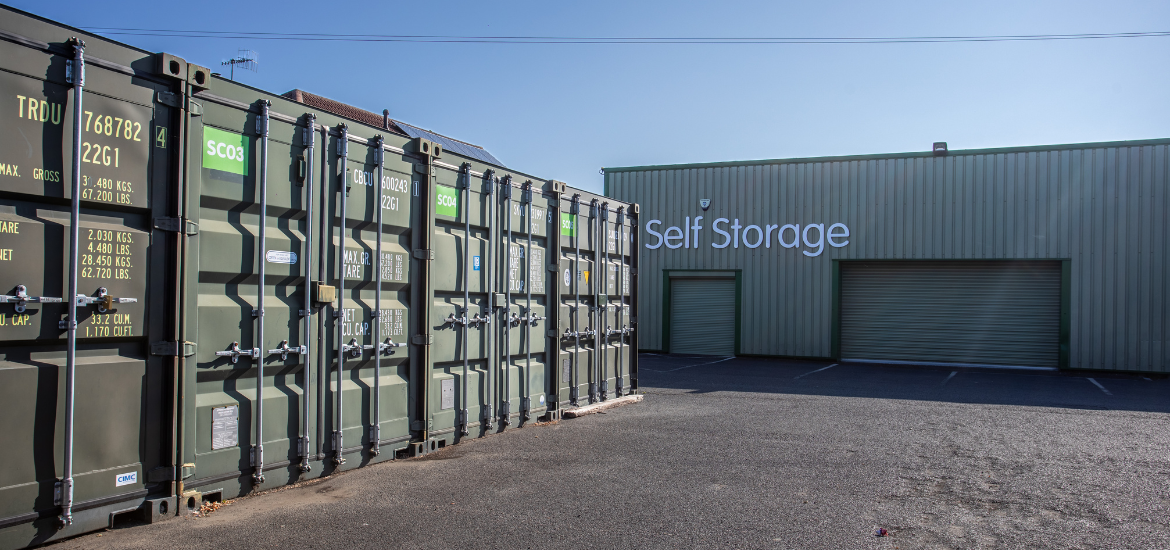
Container storage normally involves renting an individual steel shipping container positioned within a managed storage facility. The most familiar option is a full-size container, although sizes and configurations can vary between providers and locations.
Unlike an indoor storage room, container storage usually offers direct vehicle access. You can park close to the doors and load your belongings straight into the unit.
This makes shipping container storage in Chesterfield especially useful for:
- Tradespeople storing tools, equipment and materials
- Small businesses holding stock or packaging
- People moving house or renovating
- Landlords storing furniture between tenancies
- Online retailers needing overflow space
- Households storing bulky furniture, garden equipment or seasonal belongings
The same benefits appeal to people searching for shipping container storage in Hope Valley, particularly when they need convenient access to larger or heavier items without repeatedly carrying them through an indoor facility.
The Pros of Container Storage
1. Drive-up access makes loading easier
The biggest advantage is convenience.
With a well-designed container storage facility, you can usually bring a car, van or suitable commercial vehicle close to your unit. That means fewer journeys between the vehicle and storage space, less lifting and a reduced chance of damaging furniture by squeezing it through corridors.
This is particularly helpful when storing:
- Heavy tools and trade equipment
- Large quantities of business stock
- Flat-pack furniture
- Appliances
- Boxes of documents
- Exhibition equipment
- House contents during a move
Direct access can also make regular stock collection quicker for businesses. Instead of treating storage as a forgotten dumping ground, the container can become an organised extension of your van, workshop, office or stockroom.
2. Containers provide a large, uninterrupted space
Shipping containers tend to offer a long, open storage area without internal columns, awkward corners or permanent shelving.
That shape works well for lengthy or bulky items such as ladders, workbenches, tables, wardrobes, flooring, display stands and large pieces of equipment. It also gives you the freedom to install freestanding shelving, provided your storage agreement permits it and nothing is permanently attached to the container.
The danger, of course, is creating a steel version of the cupboard under the stairs: everything gets pushed inside and the item you need ends up behind seventeen boxes and a dismantled bed.
A simple central walkway and clearly labelled storage zones can prevent this.
3. Steel containers are robust
A container in good condition provides a strong physical shell around your belongings. Properly maintained doors, locking gear, seals and vents all contribute to protecting the contents.
However, the steel box is only one part of the security picture. The surrounding facility should also have appropriate controls, such as secure perimeter fencing, monitored access, lighting and CCTV.
When comparing providers, do not accept “it’s a steel container” as the complete security explanation. Ask what protects the wider site as well as the individual unit.
4. It can be a practical business storage solution
For small businesses, container storage can provide extra capacity without committing to a larger commercial property or traditional warehouse lease.
A tradesperson could use it to separate valuable tools from the family garage. An online retailer could hold slower-moving stock there. A local events business might store tables, banners and exhibition equipment between bookings.
It can also help growing businesses avoid filling offices, spare bedrooms and hallways with stock. Your home should not require a warehouse picking system just to reach the kettle.
Go Store provides flexible storage options for businesses and households across Chesterfield and Hope Valley, with facilities in Grassmoor, Queen’s Park and Foolow. Current locations and availability can be checked at https://gostore.space/.
5. Flexible rental can suit temporary situations
Container storage can be useful when you need considerable space but do not know exactly how long you will need it.
Common situations include:
- A house sale completing before the new property is ready
- A major renovation overrunning
- A business experiencing a seasonal increase in stock
- An office or workshop relocation
- Clearing a property following a bereavement
- Storing equipment between contracts
Check the minimum rental period, notice requirements and payment terms before signing. “Flexible” should mean that the arrangement works for you. Not merely that the price is flexible enough to increase when you read the small print.
The Cons of Container Storage
1. Temperature changes and condensation need consideration
Steel is strong, but it is not naturally insulated. As outdoor temperatures rise and fall, the temperature inside a container can change too.
Moisture already present in the air or introduced by damp belongings can condense on cold surfaces. This is sometimes called “container sweat”. If storage is poorly managed, condensation can contribute to musty fabrics, weakened cardboard boxes, corrosion or mould.
This does not mean all container storage is damp. A suitable container should be in good condition, appropriately ventilated and positioned on a properly maintained site. Customers also play an important role by ensuring belongings are clean and completely dry before storage.
The Self Storage Association UK recommends leaving gaps between stored items and avoiding stacking belongings directly against the walls so that air can circulate. It also suggests visiting a unit regularly to inspect the contents and air the space where appropriate: https://www.ssauk.com/customer-info/customer-advice-on-self-storage.html.
For additional protection:
- Never store damp tools, wet garden furniture or recently cleaned rugs
- Raise boxes and furniture slightly off the floor
- Leave a small gap between belongings and the container walls
- Use breathable furniture covers rather than tightly wrapping fabrics in ordinary plastic
- Use sturdy plastic boxes for items that could be affected by moisture
- Consider suitable moisture absorbers where permitted
- Check the unit periodically, especially after extreme weather
2. Very delicate items may need a different environment
Container storage is excellent for many everyday belongings, but it may not be the best option for everything.
Items that are particularly sensitive to changes in temperature or humidity may be better suited to a suitable indoor room or specialist controlled environment. Examples may include valuable artwork, delicate antiques, certain musical instruments, archival material and sensitive electronic equipment.
Ask the storage provider what they recommend rather than assuming that every item belongs in the same type of unit.
3. You may end up renting more space than you need
A large container can appear good value, but only when you genuinely need the capacity.
Paying for a half-empty container over a long period can become more expensive than choosing a smaller indoor unit. Before booking, create a basic inventory and estimate how much space your belongings will occupy when stacked safely.
Do not choose solely on floor space. Consider the height of your items, whether boxes can be stacked, how wide the doors are and whether you need a walkway.
A slightly larger unit may be worthwhile when you need frequent access. If everything can be packed closely and left untouched until moving day, a smaller unit may be sufficient.
4. Outdoor access is convenient, but weather still exists
Drive-up access is extremely useful until you choose the wettest Saturday in Derbyshire to move a fabric sofa.
Ask whether there is enough space to park safely near the unit and whether the ground remains usable during poor weather. Check for potholes, standing water, steep slopes and awkward turning areas.
Bring covers for furniture and have a sensible loading plan. Keeping the container doors open for hours during heavy rain can introduce moisture, even when the unit itself is perfectly sound.
5. Security standards vary between sites
A strong door and padlock do not compensate for weak perimeter security.
Ask whether the facility has:
- Controlled entry and exit
- CCTV coverage
- Perimeter fencing or secure gates
- Suitable lighting
- A record of who enters the site
- Procedures for reporting damage or suspicious activity
- Clear access rules for customers and visitors
You should also ask who supplies the lock. A weak padlock can become the weakest part of an otherwise strong unit.
The Container Storage “Don’t Get Stung” Checklist
Before agreeing to rent container storage in Chesterfield or container storage in Hope Valley, work through the following questions.
1. Have you inspected the actual container?
Do not rely entirely on a generic website photograph.
Look inside the unit you will rent, where possible. Check the floor, walls, ceiling, seals and doors. The container should look clean and well maintained, without obvious holes, significant corrosion, standing water or a strong damp smell.
Close the doors while standing inside briefly and look for visible daylight entering through areas where it should not.
2. Is it wind and watertight?
Ask the provider to confirm that the container is suitable for self storage and protected against normal weather conditions.
Check the door seals and make sure the doors close properly. Stiff doors are not merely inconvenient; they may indicate alignment or maintenance problems.
3. What ventilation or condensation controls are provided?
Look for ventilation points and ask how condensation risk is managed.
You should also explain what you plan to store. Furniture, paper records, metal tools and packaged retail stock can have different requirements.
A reputable provider should be willing to discuss whether a container is suitable rather than simply handing you a key and hoping for sunshine.
4. How secure is the entire site?
Check the gates, fencing, lighting and access system, not just the container door.
Ask whether CCTV operates throughout the site, how access is controlled and whether each customer receives an individual access code. Never share your access code unnecessarily, and do not allow an unknown person to follow your vehicle through a secure gate.
The Self Storage Association UK advises customers to protect their access codes, close gates and doors properly, and report signs of damage or a possible security breach: https://www.ssauk.com/customer-info/customer-advice-on-self-storage.html.
5. What access will you actually receive?
“Convenient access” can mean different things.
Confirm:
- The days and hours you may visit
- Whether advance notice is needed
- Whether access changes on bank holidays
- Which vehicles can enter the site
- Whether large vans can turn and park safely
- Whether poor weather affects access
- Whether another person can access the unit on your behalf
Businesses should think about how access arrangements fit their working day. A container full of urgent stock is not very useful when you cannot reach it before Monday morning.
6. What is included in the advertised price?
Ask for the full cost in writing.
Check for:
- VAT
- Deposits
- Administration charges
- Lock costs
- Insurance or contents-protection charges
- Minimum rental periods
- Notice requirements
- Late-payment charges
- Price increases
- Charges for changing units
A very low introductory price may still be worthwhile, but you need to know what happens when the offer ends.
7. Are your belongings properly insured?
Do not assume the storage company’s building or business insurance automatically covers everything inside your unit.
The Self Storage Association UK explains that customers are generally responsible for arranging suitable cover for their stored goods. It recommends calculating cover using the cost of replacing everything, rather than its second-hand value: https://www.ssauk.com/customer-info/insurance.html.
Create an inventory and take photographs of valuable belongings before moving them into storage. Update the insured value when adding or removing expensive items.
8. Are any of your items prohibited?
Every storage provider should have a list of items that cannot be stored.
Restrictions commonly apply to illegal goods, perishable food, live animals, flammable substances, fuels, explosives, gas cylinders and hazardous chemicals. Some apparently ordinary items, including certain paints, solvents and compressed gases, may also be prohibited.
Check the terms before arriving with a van full of equipment. The Self Storage Association UK advises customers to consult their contract or ask the provider whenever they are uncertain: https://www.ssauk.com/customer-info/customer-advice-on-self-storage.html.
9. Is the unit the right size and shape?
Ask for internal measurements, not just a description such as “large container”.
Measure your biggest items and check the door width. Remember to allow space for shelving, safe stacking and a walkway when regular access is needed.
It may help to mark the unit dimensions on a garage floor or driveway using tape. This provides a clearer idea of the available space than trying to imagine a number of square feet.
10. Have you planned how to pack it?
Put belongings you will rarely need at the back. Keep frequently used tools, files or stock near the doors.
Use clear labels on more than one side of each box and create a basic map of the unit. Leave a walkway when possible, keep heavy boxes low and avoid creating unstable towers.
The Self Storage Association UK notes that cardboard can soften over time, so boxes at the bottom of a stack need to be strong enough to support those above them: https://www.ssauk.com/customer-info/customer-advice-on-self-storage.html.
11. Have you photographed the unit before loading?
Take photographs of the empty container, including the floor, doors, walls and ceiling.
This gives you a record of its condition at the beginning of the rental and can help identify any changes during later inspections.
Photographing the packed unit is also useful for remembering what is inside. It is much quicker than driving across Chesterfield because you cannot remember whether the Christmas decorations are in storage or hiding in the loft.
12. Will you check the unit regularly?
Storage should not always mean “lock it and forget it”.
Visit periodically to inspect the condition of the container and your belongings. Look for damaged boxes, signs of moisture, unusual smells, pest activity or anything leaning dangerously.
Regular checks allow small problems to be addressed before they become expensive ones.
Container Storage or an Indoor Storage Unit?
Neither option is automatically better. The right choice depends on what you are storing and how you plan to use the space.
Container storage may be preferable when:
- You need drive-up loading
- Your belongings are large or heavy
- You want an open, uninterrupted storage space
- You regularly collect tools or stock
- Your goods are not exceptionally temperature-sensitive
An indoor storage room may be preferable when:
- You only need a small amount of space
- You are storing more delicate belongings
- You prefer an internal environment
- The site offers a wider selection of smaller unit sizes
- You do not need to park directly beside the unit
A good storage provider should help you compare the available options honestly.
Finding the Right Container Storage in Chesterfield or Hope Valley
The cheapest container is not necessarily the best value, and the most impressive-looking facility is not necessarily the most practical.
Focus on the complete arrangement: the condition of the unit, site security, drainage, ventilation, access, pricing, insurance and customer support.
Go Store offers storage solutions across Chesterfield and Hope Valley for personal and business customers. Whether you need an outdoor container, a smaller indoor room or space for business stock and equipment, the team can help you compare the available options and choose an appropriately sized unit.
Explore the current storage facilities at:
- Grassmoor, Chesterfield: https://gostore.space/self-storage-in-grassmoor/
- Queen’s Park, Chesterfield: https://gostore.space/self-storage-queens-park-chesterfield/
- Foolow, Hope Valley: https://gostore.space/self-storage-in-foolow/
Contact Go Store to discuss current availability and find a secure storage option that gives you the space you need, without any unpleasant surprises hidden behind the container doors.